Home› Health Guides› Pediatrics
Play Is the Work: Why Unstructured Time Is Not a Gap in the Schedule
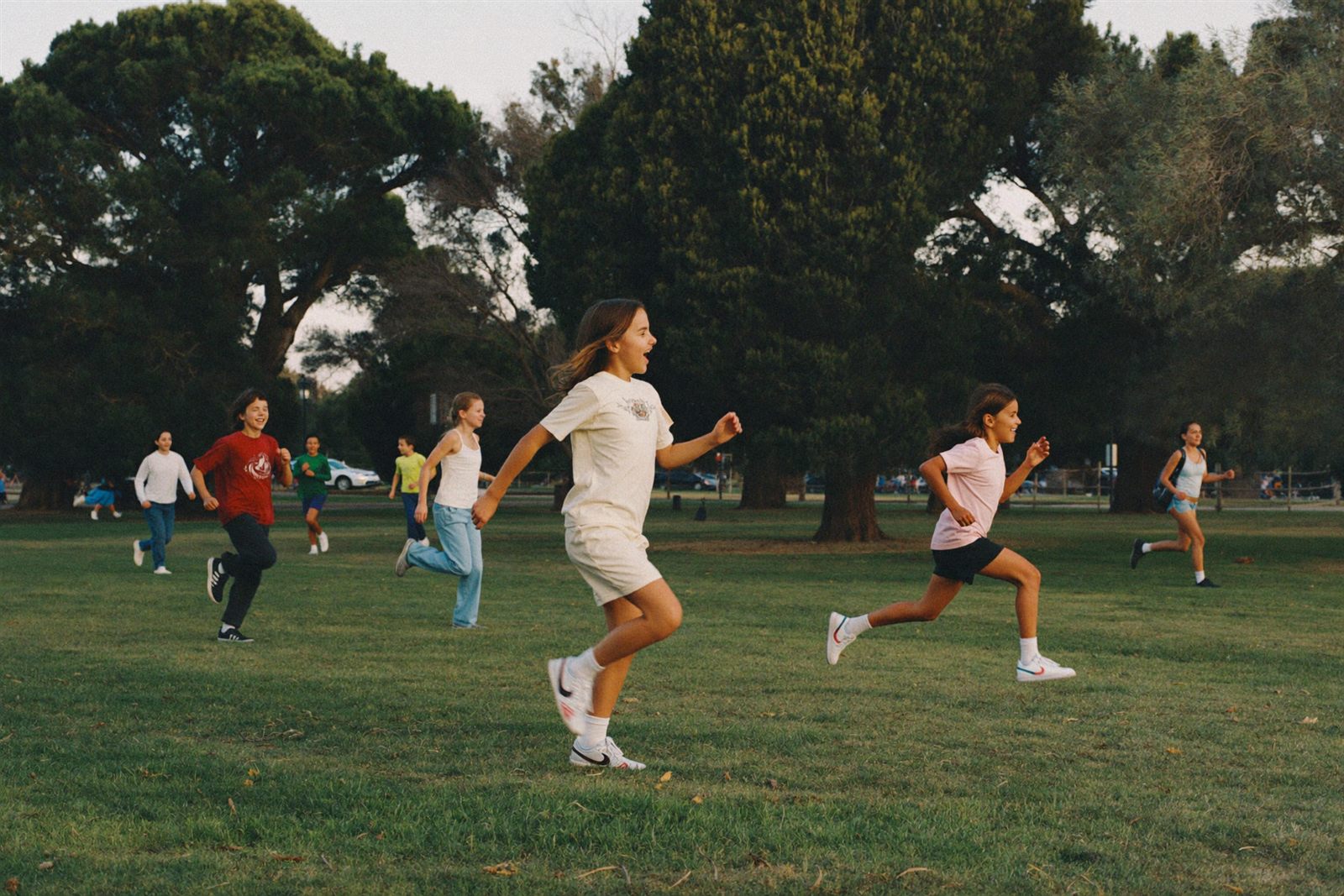
Play is not the reward for finishing the important things. It is one of the important things.
That is not sentiment. Play is how children build language, self-control, problem-solving, physical coordination and the ability to get along with other people — and the version that does the most for all of that is the least organised: child-led, adult-light, no scoreboard, no curriculum, no outcome.
Which is a problem, because unstructured time is exactly what a modern childhood has least of. It is the thing that gets traded away first for an activity that looks more productive on paper.
What play is actually doing
Language. Pretend play is a language engine. A child narrating a game is practising vocabulary, sequencing and grammar at a volume no lesson matches.
Self-control. This is the one that surprises people. Children playing together have to negotiate, wait, take turns, manage losing, and stick to rules they invented — which is practice at exactly the skills we later call maturity. A child who can organise a complicated game with three other children is doing something cognitively harder than most worksheets.
Problem-solving and persistence. Play involves constant small failures with low stakes, which is the ideal condition for learning to try again.
Physical development. Climbing, running, balancing, throwing. Risky play — heights, speed, rough-and-tumble — is how children calibrate their own limits, and children who never get it are not safer in the long run.
Stress regulation. Play is one of the main ways children process things they cannot yet talk about. A child who has had a frightening experience often plays it out repeatedly, and that is the processing working rather than a problem.
Relationship. Play with a parent is one of the highest-value things you can do, and it does not require an activity plan.
What this looks like by age
Babies: faces, voices, peekaboo, mirrors, being talked to constantly. You are the toy. Serve and return — they make a sound, you respond, they respond — is the foundation of everything after it.
Toddlers: repetition, filling and emptying, cause and effect, banging things. Words on everything. The best toys are open-ended — blocks, cups, boxes — and the least useful are the ones that do one thing loudly when a button is pressed.
Preschoolers: pretend play becomes the main event, and it is the most developmentally dense thing they do. Dressing up, playing shop, making a den. Let the story be theirs, including when it makes no sense.
School age: games with rules, collaboration, building projects, physical skill. Early friendships take real work. Boredom becomes useful here — it is the doorway to invention, and rescuing a child from it immediately teaches them that someone else supplies the ideas.
Teenagers: still play, under other names — sport, music, making things, gaming with friends, hours of unstructured talking. The need for unscheduled time does not end at twelve, and it is when the calendar is fullest.
Four things worth protecting
1. Unscheduled time, deliberately. If every afternoon is committed, there is nowhere for this to happen. Two or three activities a week with genuinely open time around them beats five.
2. Boredom. Not a failure of parenting. The pause where a child decides what to do is where the interesting things come from, and it is uncomfortable for about ten minutes.
3. Outdoors, whenever the weather allows. Movement, light, bigger spaces, and better sleep afterwards. Also fewer shared indoor viruses.
4. Other children, without a referee. Some conflict, negotiated by them with an adult nearby rather than in the middle, is the practice that matters.
Screens, honestly
The useful question is not how many minutes. It is what the screen replaced.
An hour of a video with a parent, talked about afterwards, is a different thing from an hour that displaced going outside and a conversation. A screen used as the answer to every wait, every queue and every car journey removes the small gaps where a child would otherwise have to entertain themselves — and that capacity is built, not innate.
A few things are reasonably well supported:
- Under about 18 months, avoid screen media other than video calls with family. Very young children learn from people, and a screen does not teach them at this age
- Watch with them when you can, and talk about it. That converts passive time into language
- No screens in the bedroom overnight, and off well before bed — see our children’s sleep page
- Not during meals, which is where a lot of family conversation lives
- Notice what it is displacing, which is more informative than any minute count
And be realistic. A screen that buys a parent twenty minutes to cook dinner or make a phone call is a legitimate use of a tool, and guilt about it does nobody any good.
When play is telling you something
Play is also one of the clearest windows into development, which is why we ask about it at well-child visits.
Worth mentioning to us:
- Not pointing at things to show you by around 18 months, or not following your point
- Little or no pretend play by around two to three
- No interest in other children, or consistently playing alongside rather than with them well past the age it is typical
- Loss of a skill they previously had — any loss of language or social skill is worth a prompt call
- Very repetitive play that cannot be interrupted or varied
- Not joining in physical play, or avoiding it — this is sometimes a coordination, vision or hearing problem rather than a preference. Our vision and hearing page covers why those often present as behaviour first
- Play that repeatedly enacts something frightening or sexual, or a marked change in how a child plays after an event
- A child who never plays, or seems flat and uninterested. In a child, that can be how low mood presents
None of these is a diagnosis. They are reasons to mention it — and if you are worried about your child’s development, you do not need to wait for the next scheduled visit.
The Arizona part
Here, protecting outdoor play means working around five months of the year rather than through them.
In summer, play outdoors is an early-morning activity. Before about 9am, and then the shade and the water. Playground equipment and slides reach surface temperatures capable of causing contact burns, and artificial turf gets considerably hotter than natural ground — check surfaces with your own hand before a child plays on them. Our heat safety page covers where the real line is, and it is not the air temperature alone.
Water is the summer answer, and it comes with the one rule that matters most. Pools are everywhere in the Valley, and drowning is a leading cause of death in young children in Arizona. It is silent and it is fast.
- Constant, undistracted adult eyes on the water — not a phone, not a conversation. Name one adult as the watcher and hand that role over explicitly
- Layers of barriers: a fence with a self-closing, self-latching gate that a child cannot reach, and door alarms
- Swim lessons, from about age one, which reduce risk and do not replace supervision
- Empty buckets, coolers and paddling pools when they are not in use
And the cool months are the opportunity. October to April is close to the best climate in the country for a child to be outside. Front-load the year — the parks, the hikes, the bikes, the unstructured afternoons in a yard — and treat summer as the season you work around. Our winter-in-Phoenix page makes the wider case.
Sources
- Toddler development — MedlinePlus Medical Encyclopedia, U.S. National Library of Medicine. https://medlineplus.gov/ency/article/002010.htm
- Drowning — MedlinePlus topic page, U.S. National Library of Medicine. https://medlineplus.gov/drowning.html
A note on this article: This information is general health education and is not a substitute for a visit with a provider. If you have a concern about your health or your family’s health, call us and we will help.